A sports robot can send the same ball, hold the same resistance, or record the same movement again and again. That gives athletes a cleaner way to train one skill, but it doesn't decide which skill deserves their time.
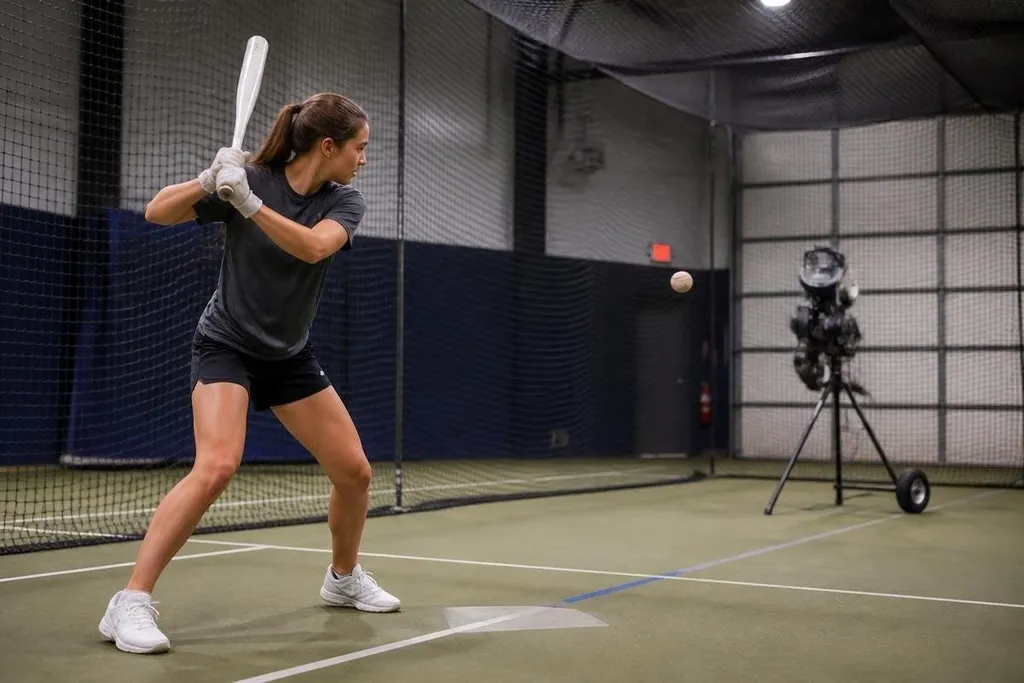
- Ball machines can repeat speed, angle, and placement.
- Robot arms can apply measured force during drills.
- Cameras and motion sensors can record changes across sessions.
Repeatable drills create cleaner practice
Human training partners get tired, change position, and vary their timing. A robot can repeat a programmed action with fewer changes, which helps an athlete focus on one part of a movement.
A tennis ball launcher, for example, can send shots toward a chosen area of the court. The athlete can work on foot placement or swing timing without guessing what comes next. A cricket bowling machine can do the same for a batter facing a set line and length.
That repeatability has a limit. A match does not send the same ball forever, so fixed drills should build toward changing speed, direction, and timing. If the robot keeps serving the same shot, the athlete may become good at the drill rather than the sport.
Robots can add resistance and control
Some training systems use a motor to control resistance during a lift or movement. The motor can hold a load, slow a movement, or add force at a set point. This gives a coach another way to shape the exercise without relying on a partner to match the same force each time.
Force sensors can measure how much pressure an athlete applies. Position sensors can track joint movement, while cameras can record posture and timing. An inertial measurement unit, which tracks motion through acceleration and rotation, can add data when cameras cannot see the whole body.
The useful output is not a wall of numbers. A coach might need to know that the athlete's knee moved inward during a landing, or that force dropped late in a repeated sprint drill.
The system helps when it turns that measurement into one clear change for the next session.
Feedback matters more than the robot's shape
A robot does not need a human form to help an athlete. A moving arm, a guided cable, a ball launcher, or a camera rig may fit the task better than a humanoid machine. The hardware should follow the drill, not the other way around.
Training results need more than a moving target or a clean video clip. A dated sports robotics report from Robot24.com can show the drill, the robot’s role, and the measure used, giving coaches a way to judge whether the system adds useful feedback or another distraction. Timing decides how much of that information an athlete can use.
Feedback also needs timing. Information given during a drill can interrupt the athlete's focus, while information given after the set may be hard to connect to the movement. A useful system should let the coach choose when the athlete receives the result and which measure appears.
Privacy adds another concern. Motion video, force records, and injury data can reveal details about an athlete's body and training plan. Teams need clear rules for storage, access, and deletion before they place these systems near young athletes or shared training spaces.
Where sports robots fall short
Repeating a task does not fully recreate a match. The robot may miss the pressure of an opponent, the changing surface underfoot, or the choice an athlete makes when the planned move stops working.
Safety needs careful design too. A moving arm or resistance motor must stop when the athlete enters an unsafe position. Coaches need a physical emergency stop, a clear working area, and a drill plan that starts with low force before moving higher.
Cost and setup can also narrow the value. A system that takes too long to calibrate may lose training time, and a system that needs a specialist for every change may sit unused between sessions. I'd choose a plain machine that coaches can adjust over a more complex robot with features the team rarely uses.
A practical buying checklist
Before adding a robot to athlete training, check these points:
- Name the drill: define the movement, ball path, or resistance pattern the system must repeat.
- Set the feedback: decide which sensor result the coach will use and when it reaches the athlete.
- Test the stop: place and test the emergency stop before any live session.
- Check the change time: measure how long it takes to switch between athletes and drills.
- Protect the records: set access rules for video, force data, and health details.
Sports robots make the most sense when they remove unwanted variation from a narrow part of practice. The coach still sets the goal, changes the drill, and decides when repeatable work has become useful match skill.